
table of content
- AI Agent Development Services
- What Is an AI Agent, and How Is It Different From a Chatbot?
- Core AI Agent Development Services
- Types of AI Agents Businesses Are Building in 2026
- Industry Use Cases and the Numbers Behind Them
- The State of AI Agent Adoption: 2026 Snapshot
- Why CodeStore Solutions for AI Agent Development
- Our AI Agent Development Process
- What Does AI Agent Development Cost?
- Frequently Asked Questions


AI Agent Development Services 2026 | CodeStore Solutions
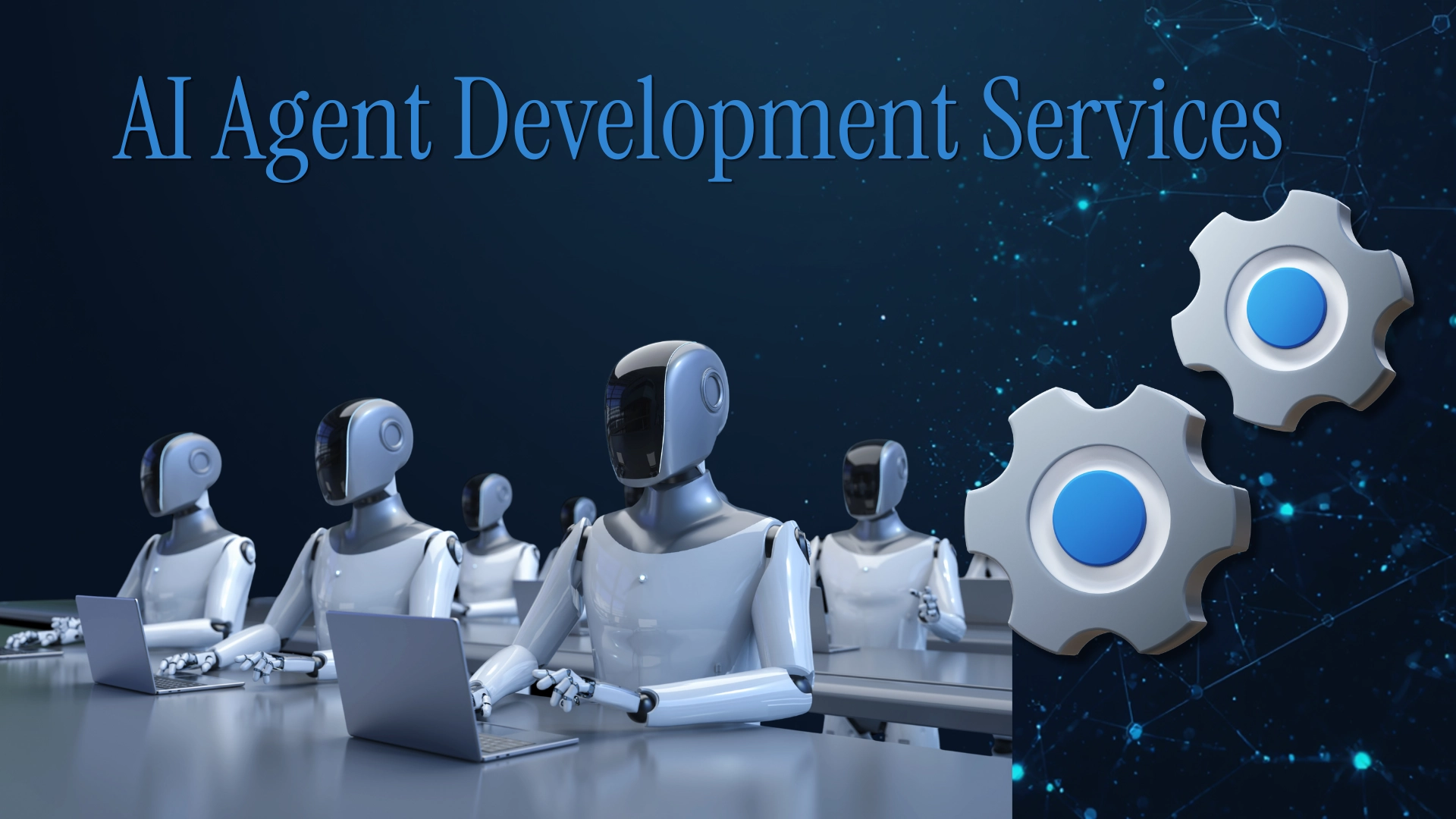
AI Agent Development Services: The Complete 2026 Guide to Building Autonomous Business Systems
Every enterprise conversation about efficiency in 2026 eventually lands on the same question: can software finally do the thinking, not just the recording? That is exactly what AI agents are built for, and it’s why the category has moved from research-lab curiosity to boardroom priority in under three years.
Recent industry surveys put a number on that shift: over 60% of large organizations report they are now piloting or actively running AI agents somewhere in their operations, and roughly 4 in 10 say they have committed meaningful budget to agentic projects rather than one-off experiments. Adoption studies from PwC and IBM also point to a consistent pattern. Companies that get agent deployment right report productivity gains in the 25–50% range for the specific workflows they automate. That’s not a marginal improvement; it’s a structural one.
At CodeStore Solutions, an offshore custom software and AI development company based in Noida, we build these systems for clients who need more than a demo — they need an agent that survives contact with a messy ERP, a compliance audit, and a Monday morning traffic spike. This guide walks through what AI agent development services actually include, what they cost, which industries are seeing the fastest ROI, and how to evaluate a development partner before you sign anything.
What Is an AI Agent, and How Is It Different From a Chatbot?
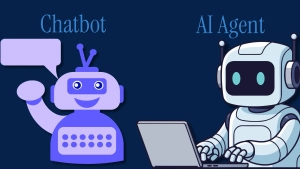
A chatbot answers. An AI agent acts.
A traditional chatbot is reactive. It matches a query to a pre-written or generated response and stops. An AI agent is given an objective (“resolve this support ticket,” “reconcile this invoice,” “qualify this lead”) and it plans a sequence of steps, calls the tools and systems it needs, checks its own results, and adjusts if something doesn’t go as expected, all with minimal human prompting at each step.
Concretely, the difference plays out like this: a chatbot can tell a customer their order is delayed. An AI agent can find the order, confirm the delay with the courier’s API, notify the customer proactively, and flag the account to a human rep without anyone walking it through each step.
This distinction matters commercially because it changes what you’re buying. You’re not purchasing a smarter FAQ widget; you’re purchasing a digital worker with defined scope, permissions, and accountability.
AI Agent Development Services
Core AI Agent Development Services
Most serious AI agent development engagements break down into seven service areas. Skipping any one of them is usually where enterprise pilots stall out before reaching production.
-
AI Agent Strategy Consulting
Before a single line of code is written, we map your operational workflows to find the highest-friction, highest-volume tasks — approvals, data validation, exception handling, repetitive customer queries and score them for automation potential and expected ROI.
-
Custom AI Agent Design & Development
This is where the agent’s “brain” gets built: reasoning patterns (ReAct, Chain-of-Thought), memory architecture, and task-specific logic. At CodeStore, our engineering teams design agents around your actual data model rather than forcing your business into a generic template.
-
AI Agent Integration
An agent that can’t talk to your CRM, ERP, or ticketing system is a demo, not a deployment. Integration work covers secure API connections, authentication, and error recovery so the agent operates inside your existing tech stack instead of alongside it.
-
Security, Compliance & Governance
Every agent we build is designed around role-based access, audit logging, and explainability from day one — not retrofitted after a compliance review flags a gap. This matters more as agents touch sensitive systems: financial records, patient data, HR files.
-
Multi-Agent Orchestration
Complex processes often need more than one agent working together — a research agent, a validation agent, and an execution agent coordinating like a small team. Orchestration frameworks like LangGraph and CrewAI make this coordination auditable rather than chaotic.
-
Performance Optimization & Drift Management
Models degrade as your data changes. Ongoing tuning — through reinforcement learning, prompt refinement, and automated drift detection — keeps accuracy from quietly slipping over months of production use.
-
Ongoing Support & Maintenance
Agents need feature expansion, bug fixes, and capacity scaling just like any production software. This is the phase most vendors underinvest in and where long-term ROI is either protected or lost.
AI Agent Development Services
Types of AI Agents Businesses Are Building in 2026
Not every use case needs the same kind of agent. Here’s the spectrum we design across:
- Rule-Based Agents — straightforward if-then logic for routine tasks like spam filtering or alerting.
- Goal-Oriented Agents — evaluate multiple paths to reach a defined outcome; useful for planning and process optimization.
- Learning Agents — improve from historical data and user behavior over time, powering recommendation engines and predictive insights.
- Reactive Agents — no memory, built for instant response; strong fit for fraud detection and network monitoring.
- Autonomous Agents — make real-time decisions without oversight, common in logistics and smart infrastructure.
- Multi-Agent Systems — coordinated groups of agents handling large-scale, multi-department workflows.
- Conversational Agents — context-aware chat and voice agents for support, onboarding, and engagement.
Industry Use Cases and the Numbers Behind Them
Retail & eCommerce: Product recommendation agents, inventory refill agents, and returns assistants. Retailers piloting agentic customer support report resolution times dropping by roughly 4x and support call volume falling by up to 70% for repetitive queries.
Financial Services: Fraud detection, loan underwriting, KYC/AML automation, and expense categorization. Firms using AI agents for claims and underwriting report faster case resolution and materially fewer manual errors in high-volume workflows.
Healthcare: Prior authorization, clinical decision support, patient scheduling, and administrative automation — all designed with a human-in-the-loop checkpoint for anything touching a clinical decision.
HR & Recruitment: Resume screening, onboarding agents, and leave-tracking automation that cut administrative overhead without removing human judgment from hiring decisions.
Sales & Marketing: Lead-scoring and sales-assistance agents. Businesses deploying these report response speed improving by as much as 3x and measurably higher conversion from qualified leads.
Logistics & Manufacturing: Predictive maintenance, demand forecasting, and route optimization agents that reduce manual coordination effort by close to half in mid-size operations.
Education: Personalized learning-path agents and automated grading assistants that free instructor time for higher-value teaching tasks.
The State of AI Agent Adoption: 2026 Snapshot
- More than 6 in 10 organizations are experimenting with or actively running AI agents today.
- Roughly 40% have moved past experimentation into meaningful budget commitment.
- Companies using AI agents in support and development workflows report productivity and speed gains in the 25–50% range.
- Analyst forecasts suggest a large share of enterprise software will embed agentic capability within the next two to three years, with a meaningful portion of routine work decisions handled autonomously.
The gap between the leaders and the laggards isn’t the technology — most companies now have access to similar models. The gap is execution: data readiness, integration discipline, and governance built in from the start.

AI Agent Development Services
Why CodeStore Solutions for AI Agent Development
CodeStore Solutions works as an extension of your engineering team rather than a black-box vendor. A few things shape how we approach every agent build:
- Offshore economics, enterprise standards. Based in Noida, we deliver the same architectural rigor as larger Western consultancies at a materially lower cost structure, which matters when you’re funding a multi-agent rollout rather than a single pilot.
- AI agent development and GenAI integration as a core specialty, not a bolt-on to legacy software work — our teams stay current with frameworks like LangChain, LangGraph, and Model Context Protocol (MCP) implementations for tool-calling and cross-agent context sharing.
- GCC-as-a-Service delivery model, letting enterprises stand up a dedicated, accountable engineering capacity for AI agent work without the overhead of building an in-house team from scratch.
- Security-first builds — access governance, audit trails, and compliance alignment are part of the initial architecture conversation, not an afterthought before go-live.
- Transparent scoping — we size projects against your actual workflow complexity rather than pushing a fixed-price package that doesn’t fit your systems.
Our AI Agent Development Process
- Discovery & Use Case Definition — map workflows and prioritize automation opportunities.
- Technical & Data Readiness Assessment — audit your existing systems for integration and data quality gaps.
- Architecture & Framework Selection — choose the right LLMs, orchestration tools, and memory layer for your scale.
- Design, Build & Train — develop the agent(s), embedding security and governance controls from the start.
- Testing & Validation — simulate real-world edge cases before anything touches production data.
- Deployment & Integration — connect the agent into your live environment with monitoring in place.
- Monitoring, Feedback & Continuous Optimization — track drift, retrain on schedule, and expand capability as needs evolve.
What Does AI Agent Development Cost?
Pricing depends on four levers: agent complexity, number of system integrations, degree of customization, and ongoing support scope. A single-purpose agent (say, an invoice-categorization bot) sits at the lower end of the spectrum. A coordinated multi-agent system spanning CRM, ERP, and customer-facing channels sits considerably higher, reflecting the integration and testing effort involved. Most enterprise-grade builds take anywhere from 6 to 20 weeks depending on scope, with larger multi-agent rollouts extending further.
Frequently Asked Questions
Looking to identify where an AI agent could remove the most friction from your operations? CodeStore Solutions offers a structured discovery workshop to map your highest-impact automation opportunities before you commit to a build