
table of content
- Agentic AI Development Cost
- Understanding Agentic AI Development Cost Structure
- Factors That Affect Agentic AI Development Cost
- Real Cost Examples for Agentic AI Development
- agentic AI development project budget
- Strategies to Reduce Agentic AI Development Cost
- Calculating ROI for Agentic AI Development
- Common Cost Mistakes in Agentic AI Development
- Pricing Models for Agentic AI Development Services
- What You Should Budget for Agentic AI Development
- Getting Accurate Agentic AI Development Cost Estimates
- Conclusion


Agentic AI Development Cost: Pricing Guide 2026
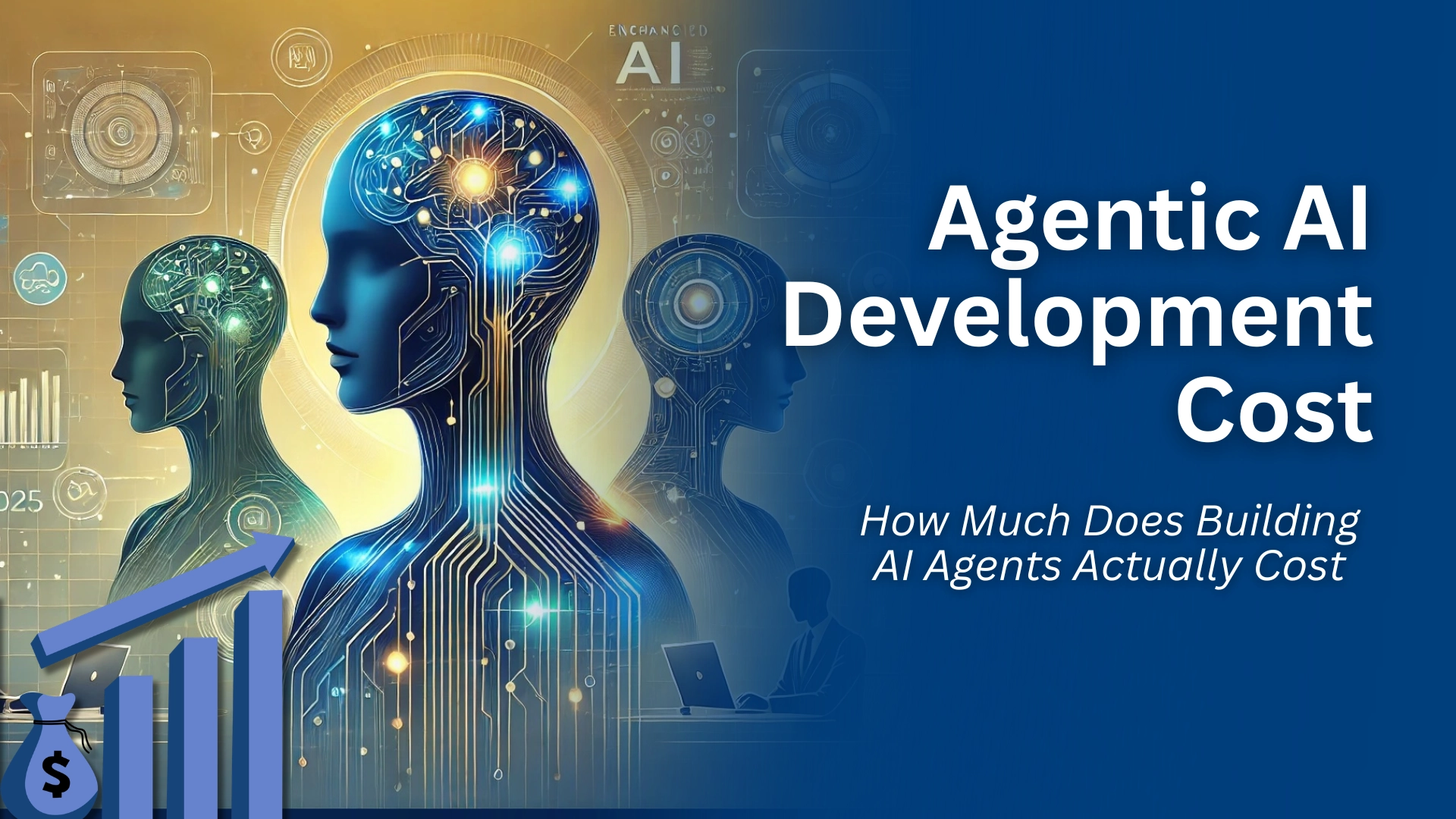
Agentic AI Development Cost: How Much Does Building AI Agents Actually Cost
If you’re considering agentic AI development for your business, one of your first questions is probably about cost. What’s the actual price of AI agent development? How much does it cost to build autonomous agents? Is custom AI agent development affordable for mid-sized companies? What factors affect the cost of agentic AI development? This guide breaks down everything you need to know about agentic AI development pricing, what drives costs up and down, how to calculate ROI for your AI agent development project, and what you should budget for building autonomous agents. Whether you’re wondering what AI agent development services cost, trying to understand pricing for custom agentic AI development, or evaluating whether AI agent development makes financial sense for your business, we’ve got the numbers and analysis you need. We’ll explore typical cost ranges, what affects pricing, real budget examples, ROI calculations, and how to make smart financial decisions about AI agent development. At CodeStore, we’ve built AI agents for dozens of companies and understand the real costs involved in agentic AI development. We know what factors genuinely impact cost and where to find value without cutting corners. Check out our home page to learn what we do, explore our agentic AI development services to see our pricing transparency and service options, or contact us if you want a specific cost estimate for your agentic AI development project.
Understanding Agentic AI Development Cost Structure
Before we talk numbers, let’s understand what actually costs money in AI agent development. The cost of agentic AI development isn’t a single line item—it’s multiple components working together. When you’re calculating agentic AI development cost, you need to account for developer time (the highest cost for most projects), infrastructure and cloud services, LLM API costs if using proprietary models, database and storage costs, monitoring and observability tools, and ongoing maintenance and improvements. Each of these adds to your total agentic AI development cost differently depending on your specific project.
Developer time is typically 60-70% of agentic AI development cost. This is the cost of talented engineers building your agents, testing them, and deploying them. The more complex your agentic AI development project, the more developer time required. Infrastructure costs typically run 10-15% of agentic AI development cost. This includes cloud platform fees (AWS, Google Cloud, Azure), database services, and hosting. LLM API costs vary wildly depending on how much your agents use them. For some agentic AI development projects, API costs are minimal. For others, they’re significant. Most companies doing agentic AI development underestimate ongoing costs. Once agents are deployed, you need monitoring, maintenance, improvements, and support. Plan for 20-30% of your initial agentic AI development cost annually for ongoing expenses.
Cost ranges for agentic AI development vary tremendously based on complexity. A simple proof-of-concept for AI agent development might cost $5,000-15,000. A production-ready agent system typically costs $25,000-75,000. Complex multi-agent systems can exceed $100,000. However, these agentic AI development investments often pay for themselves within 6-12 months through operational savings and improved productivity. The question isn’t just about cost—it’s about ROI on your agentic AI development investment
Factors That Affect Agentic AI Development Cost
Multiple factors impact the cost of your AI agent development project. Understanding these helps you predict agentic AI development costs accurately.
Project Complexity is the biggest cost driver in agentic AI development. Building an agent that handles one simple task costs far less than building multi-agent systems that coordinate complex workflows. When calculating agentic AI development cost, complexity includes how many decisions the agent must make, how many systems it must integrate with, and how much reasoning is required. A customer support agent answering FAQs costs much less in agentic AI development than a supply chain optimization agent coordinating inventory, suppliers, and forecasting.
Integration Requirements significantly affect agentic AI development cost. Agents that only need to work with one or two systems are cheaper to build than agents that must integrate with ten systems. Each new system integration adds development time to your agentic AI development project. REST API integrations are simpler than complex legacy system integrations. When planning agentic AI development, integration complexity is a major cost factor.
Model Choice impacts agentic AI development cost differently than you might think. Using expensive models like GPT-4 increases per-query costs for agentic AI development. However, GPT-4’s superior reasoning might reduce development time by handling complexity better. Smaller, cheaper models reduce per-query costs but might require more development work and additional guardrails. When evaluating agentic AI development cost, model choice involves cost-quality tradeoffs.
Development Team Location affects agentic AI development cost significantly. Hiring AI engineers in San Francisco costs more than hiring the same caliber of talent in other regions. When outsourcing agentic AI development, developer rates vary dramatically by location. At CodeStore, we focus on building high-quality AI agents cost-effectively by smartly managing development resources for agentic AI development.
Knowledge Base Size impacts development time in agentic AI development. If your agents need to understand extensive proprietary knowledge, someone must prepare and organize that information. Large knowledge bases for agentic AI development take time and cost money to create. Well-organized knowledge reduces development friction in AI agent development.
Testing and Safety Requirements influence agentic AI development cost. Agents handling financial transactions or medical decisions require extensive testing. Safety features and compliance checks add cost to agentic AI development. Consumer-facing agents need more testing than internal tools. Plan for safety in your agentic AI development budget.
Real Cost Examples for Agentic AI Development
Let’s look at real-world agentic AI development cost examples to ground our discussion in reality.
Example One: E-Commerce Customer Support Agent. This agentic AI development project involved: 500 hours of developer time at $150/hour = $75,000. Infrastructure (3 months): $3,000. LLM API costs (3 months): $2,000. Vector database: $1,500. Total agentic AI development cost: $81,500.
Results: The agent handled 70% of customer inquiries, saving approximately 200 hours monthly ($30,000 annually). Within 3-4 months, the agentic AI development investment paid for itself. By year two, ROI exceeded 400%. The cost of agentic AI development was justified by operational savings.
Example Two: Financial Analysis Agent. This agentic AI development project involved: 800 hours of developer time at $200/hour = $160,000. Infrastructure (6 months): $8,000. Data integration and testing: $15,000. Monitoring and compliance: $12,000. Total agentic AI development cost: $195,000.
Results: Financial analysts spent 40% less time on routine analysis. The freed-up time allowed them to focus on strategic work worth substantially more. The agentic AI development cost was recovered within 6 months through analyst productivity gains and improved investment decisions. Year-one ROI exceeded 250%.
Example Three: Small Business Task Automation. This agentic AI development project involved: 200 hours of developer time at $120/hour = $24,000. Simple infrastructure: $1,500. Basic monitoring: $500. Total agentic AI development cost: $26,000.
Results: Automated three recurring business processes. Saved 40 hours monthly (small business valued at $25/hour). Annual savings $12,000. The agentic AI development cost was recovered within 26 months. Long-term ROI was positive but required patience.
These examples show that agentic AI development cost varies tremendously based on project scope, but ROI is typically achievable within 12 months for well-chosen projects.
Cost Breakdown: What You’re Actually Paying For in Agentic AI Development
Let’s break down a typical agentic AI development project budget:
Developer Time (60-70% of cost): This is your largest expense in agentic AI development. You’re paying for experienced engineers who understand AI, your business, systems architecture, and software best practices. The alternative—cheap inexperienced developers—often results in agentic AI development projects that fail or require expensive rework. At CodeStore, we staff agentic AI development with senior engineers because it matters.
LLM API Costs (5-15% of cost): If using proprietary models like GPT-4 or Claude, you pay per token used. Initial development uses fewer tokens. At scale, API costs can grow. For agentic AI development using open-source models, this cost might be near zero (though infrastructure costs might increase).
Infrastructure and Cloud Services (10-15% of cost): Servers, databases, storage, networking, monitoring—all have costs. Cloud platforms handle scaling automatically but charge for what you use. Agentic AI development with heavy daily usage costs more than light usage.
Databases and Vector Search (5-10% of cost): Vector databases for semantic search (crucial for many agents) cost money, either through managed services like Pinecone or through infrastructure for self-managed solutions like Weaviate.
Testing and Quality Assurance (5-10% of cost): Comprehensive testing of agentic AI development is essential. Agents making decisions have to be right. Testing takes time and money.
Deployment and DevOps (3-5% of cost): Setting up production infrastructure, continuous integration/deployment, and monitoring requires expertise. This is often underestimated in agentic AI development budgets.
Ongoing Maintenance and Support (20-30% annual): After launch, agents need monitoring, bug fixes, improvements, and support. Plan for this when budgeting agentic AI development.

Strategies to Reduce Agentic AI Development Cost
If your agentic AI development budget is tight, there are legitimate ways to reduce costs without compromising quality.
Start Small: Begin with a proof-of-concept or MVP for your agentic AI development project. This costs 30-40% less than full production systems while proving value. Once proven, expand incrementally. This approach reduces agentic AI development risk and cost simultaneously.
Focus on High-ROI Tasks: Prioritize agentic AI development projects that solve expensive problems or handle high-volume work. Automating a task that costs $1000/month saves money faster than automating a $100/month task.
Use Open-Source Models: Open-source LLMs reduce API costs for agentic AI development compared to proprietary models. The tradeoff: potentially longer development time and more infrastructure management. For agentic AI development teams with DevOps capability, this can work well.
Leverage Existing Frameworks: Using LangChain or similar frameworks reduces development time (and cost) in agentic AI development compared to building from scratch. The framework handles complexity so your developers focus on business logic.
Reasonable Scope: Agents that do one thing well cost less than agents trying to do everything. For agentic AI development, focused scope reduces cost and increases success probability.
Partner with Experienced Teams: Hiring inexperienced developers to “save money” on agentic AI development often backfires. Experienced developers build better agents faster, reducing total agentic AI development cost. This is one area where cheap isn’t smart for agentic AI development.
Calculating ROI for Agentic AI Development
The real question isn’t just about agentic AI development cost—it’s about ROI. Here’s how to calculate whether agentic AI development makes sense financially for your business.
Identify Savings: What will the agent automate? Calculate current costs. If the agent saves 100 hours monthly at $100/hour, that’s $10,000 monthly savings ($120,000 annually). For agentic AI development costing $50,000, payback is 5 months. That’s good ROI.
Account for Productivity Gains: If agents free up expert time for higher-value work, that’s real value. If a $200/hour consultant spends 30% less time on routine analysis and more on strategic work, the value compounds over time. Agentic AI development ROI often includes this productivity multiplier.
Consider Quality Improvements: Better decisions, faster responses, fewer errors—these have financial value. Agents that improve quality generate ROI beyond direct cost savings. For agentic AI development, quality improvements are often the biggest ROI driver.
Factor in Scale: Agents that work 24/7 never get tired, never take vacation, and cost the same whether handling 10 requests or 10,000 requests. As volume scales, agentic AI development ROI improves dramatically.
Plan for Years: Most agentic AI development ROI calculations show positive return within 12 months. Over 3-5 years, agents that cost $50,000 to build can generate $500,000+ in value. Long-term perspective changes financial analysis for agentic AI development.
Common Cost Mistakes in Agentic AI Development
Learning from others’ mistakes helps you budget agentic AI development correctly.
Underestimating Scope: Teams starting agentic AI development think it will be simple, then discover complexity. Build buffers into your agentic AI development budget. Add 30-40% contingency to initial estimates.
Underestimating Ongoing Costs: Initial development is just the beginning of agentic AI development costs. Expect ongoing maintenance and improvements to cost 20-30% of initial development annually. Budget for this in your agentic AI development project.
Choosing Based on Cost Alone: Picking the cheapest developer for agentic AI development often results in expensive failures. Experience and expertise matter more than hourly rates. For agentic AI development, cheap talent often costs more overall.
Neglecting Integration Complexity: Integrating with existing systems often takes longer than building the agent itself. Agentic AI development budgets that underestimate integration end up over budget.
Assuming Cheap Models Will Work: Sometimes they do, sometimes they don’t. Testing model choices early in agentic AI development prevents expensive late discoveries. Include model evaluation in your agentic AI development budget.
Building for Tomorrow Instead of Today: Over-engineering agentic AI development adds cost without current value. Build what you need now. Expand later. This reduces agentic AI development cost and speeds time-to-value.
Pricing Models for Agentic AI Development Services
If you’re hiring external agentic AI development services, understand pricing models. At CodeStore, we use multiple approaches for agentic AI development pricing.
Fixed Price Projects: You specify what the agent should do, we quote a fixed price for agentic AI development. This works well for well-defined projects. Risk: scope creep can hurt profitability, incentivizing strict change management. Good for businesses that know exactly what they need for agentic AI development.
Time and Materials: We bill for actual developer time spent on agentic AI development. Flexible but potentially risky if scope is unclear. Better for exploratory agentic AI development where requirements evolve. Requires trust between client and development team.
Value-Based Pricing: We align agentic AI development costs with the value created. If the agent saves $100,000 annually, we might charge a percentage of savings. This aligns incentives perfectly. Most valuable for agentic AI development with clear ROI. Requires outcome transparency.
Retainer Model: Monthly fee for ongoing development and support of your agentic AI development systems. Works well for companies that need continuous improvements and maintenance.
When evaluating agentic AI development pricing from different providers, don’t compare hourly rates—compare delivered value and expertise. A $200/hour senior engineer building agents is cheaper than a $100/hour junior engineer building poorly designed agents requiring expensive fixes.
What You Should Budget for Agentic AI Development in 2026

Based on market data and our experience at CodeStore, here’s what realistic budgeting looks like for agentic AI development.
Proof of Concept: $5,000-15,000. Good for validating that agentic AI development makes sense for your specific use case.
MVP (Minimum Viable Agent): $15,000-40,000. A working agent that handles the core use case. Limited integrations, basic features. Shows practical value.
Production System: $40,000-100,000. Full-featured agents with multiple integrations, comprehensive testing, monitoring, and documentation.
Enterprise Solution: $100,000+. Multi-agent systems, complex integrations, advanced safety features, compliance requirements, dedicated support.
These agentic AI development cost ranges assume mid-market development resources. Premium boutique firms charge more. Lower-cost offshore teams charge less (with corresponding tradeoffs).
Common Agentic AI Development Budget Questions Answered
Let me address questions we hear constantly about agentic AI development cost.
Q: Is agentic AI development a good investment compared to hiring people?
A: For repeatable tasks, yes. An agent doing routine work for $50,000 replaces $100,000+ in annual salary while working 24/7. For complex reasoning requiring human judgment, agents augment rather than replace people. Most agentic AI development ROI comes from automation plus augmentation, not pure replacement.
Q: Can I build agents cheaper using no-code platforms?
A: No-code platforms reduce development cost for very simple agentic AI development. Complex agents requiring custom logic still need coding. No-code works for simple chatbots but not sophisticated autonomous agents.
Q: How much does agentic AI development cost ongoing?
A: Plan for 20-30% of initial development cost annually. This covers monitoring, bug fixes, improvements, and support.
Q: When does agentic AI development pay back?
A: Most well-designed agentic AI development projects achieve payback within 6-12 months. Faster payback is possible for high-volume automations.
Q: Should we hire developers or outsource agentic AI development?
A: Hire internally for core capability you plan to scale. Outsource specialized work or initial projects. Most teams do a hybrid approach for agentic AI development.
Getting Accurate Agentic AI Development Cost Estimates
Here’s how to get realistic agentic AI development cost quotes.
Be Specific: Describe exactly what the agent should do, what it should integrate with, and success criteria. Vague requirements lead to inaccurate agentic AI development cost estimates.
Ask for Breakdowns: Good agentic AI development cost quotes break down developer time, infrastructure, testing, and other components. Red flag if you get a single number with no justification.
Include Contingency: Legitimate agentic AI development cost estimates include 20-30% contingency for unknowns. If quotes seem too low, they probably don’t.
Consider Expertise: Higher agentic AI development cost from experienced teams is often worthwhile. Speed of development and solution quality matter more than raw hourly cost.
Plan Long-term: Discuss ongoing agentic AI development maintenance and support costs, not just initial build.
At CodeStore, we’re transparent about agentic AI development costs. We break down what you’re paying for, explain our pricing, and focus on delivering ROI for your agentic AI development investment. Want a specific cost estimate? Contact us to discuss your agentic AI development project with our team who can provide accurate pricing.
Conclusion
Agentic AI development cost is a real consideration, but it shouldn’t be the deciding factor. The question isn’t “How cheap can we build AI agents?” It’s “Will this agentic AI development investment deliver positive ROI?” For most well-chosen projects, the answer is yes—within 6-12 months.
The businesses succeeding with agentic AI development are thinking strategically about cost. They’re investing appropriately in experienced developers and good infrastructure because they understand that cheap agentic AI development often costs more in the long run. They’re calculating ROI and focusing on high-value automations. They’re starting small and scaling what works.
Agentic AI development cost varies tremendously based on scope, complexity, and team. But one thing is consistent: agents that solve real problems generate real value that vastly exceeds their development cost. The time to invest in agentic AI development is now, before your competitors gain a competitive advantage through agent automation.
Want to understand agentic AI development costs for your specific project? Contact us today for a cost assessment. Or explore our agentic AI development services to see our transparent pricing approach. The conversation about agentic AI development cost deserves expert guidance tailored to your business.