
table of content
- Customer Service Chatbot
- What Is a Customer Service Chatbot?
- Why Your Business Needs a Customer Service Chatbot
- How Customer Service Chatbots Work
- Types of Customer Service Chatbots
- Key Features Every Customer Service Chatbot
- The Real Business Impact of Adding a Chatbot
- Implementation Best Practices for Your Customer Service Chatbot
- Mistakes to Avoid with Customer Service
- Getting Started With Your Customer Service Chatbot
- Conclusion


Customer Service Chatbot Platform for Your Business
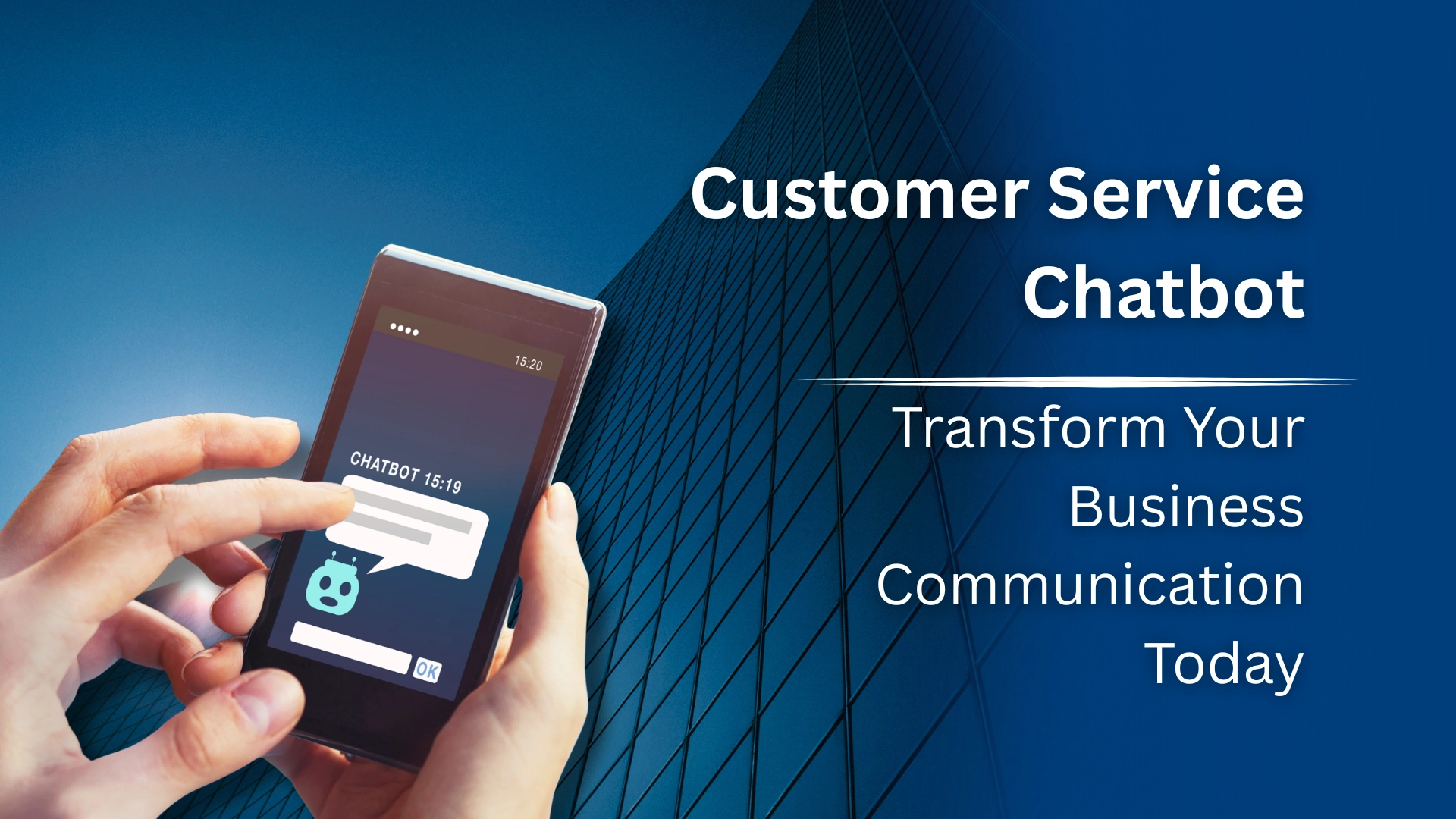
Customer Service Chatbot: Transform Your Business Communication Today
You know that feeling when you’re trying to reach customer support and end up waiting forever for a response? Yeah, your customers feel it too. A customer service chatbot might be the solution you’ve been looking for. Whether you want to understand how AI chatbots actually work, you’re ready to implement one for your business, or you’re just comparing different options out there, this guide walks you through everything you need to know. We’ll break down what customer service chatbots really are, why they actually matter for your business, how the technology works, and most importantly, how they can completely change the way you handle customer support. At CodeStore, we build chatbot solutions that real businesses use to deliver customer experiences that people actually appreciate. We’ll show you how AI-powered chatbots can revolutionize your customer interactions. Check out our home page to see what we do, explore our agentic AI development services to learn how we build this stuff, or reach out to us if you want to chat about your specific situation.
What Is a Customer Service Chatbot?
So what actually is a customer service chatbot? Basically, it’s an AI-powered tool that handles customer conversations automatically. Think of it like having a digital assistant that never sleeps—available 24/7 to answer questions, solve common problems, and help customers navigate your products or services. These chatbots use natural language processing and machine learning, which basically means they can understand what people are actually trying to say and respond with relevant, genuinely helpful answers.
Customer service chatbots have changed a lot over the years. The old ones were super rigid—you’d ask them something and they’d only understand if you asked it exactly right. Today’s chatbots are way smarter. They understand context, they can pick up on what people really mean, and conversations with them actually feel somewhat natural. Whether it’s a conversational AI chatbot or an intelligent customer support system, these tools are completely changing how businesses talk to customers.
Here’s the thing that really matters: a good chatbot works around the clock. Your customer at 2 AM on a Sunday gets an answer immediately. They don’t have to wait until your support team shows up Monday morning. That immediate response? It makes customers happier and saves your business a ton of money on support costs.
Why Your Business Needs a Customer Service Chatbot
Look, the numbers are pretty clear. Businesses that add chatbot support see real improvements—faster response times, lower support costs, happier customers. But beyond the metrics, there are some practical reasons that make a lot of sense.
First, there’s the always-on thing. Your chatbot doesn’t need sleep, vacation days, or holidays. Whether it’s 3 AM or during a holiday rush, your chatbot is there answering customer questions. Your customers get immediate responses instead of waiting days for an email reply. That’s huge for customer satisfaction.
Second, it frees up your actual team. Right now, your support staff probably spends a ton of time answering the same questions over and over. “What’s your return policy?” “How long does shipping take?” “Do you have this in size small?” With a chatbot handling these repetitive questions, your team can focus on the stuff that actually requires real human judgment and empathy—the complex problems, angry customers, or situations that genuinely need a personal touch.
Third, there’s the scaling issue. If your business grows and you suddenly get 2x the customer inquiries, you can’t just hire 2x more support people overnight. It’s expensive and time-consuming to hire and train new staff. A chatbot, though? It handles more volume without any additional cost or complexity.
Real example: A mid-sized e-commerce company we know added a customer service chatbot. Three months later, they’d cut the number of human-handled support tickets by 45%, response times dropped by 60%, and customer satisfaction actually went up by 23%. That’s not marketing speak—that’s real impact.
How Customer Service Chatbots Work
Want to understand how these things actually work? It’s kind of cool. Modern chatbots don’t rely on just one technology—they use several things working together.
Natural Language Processing (NLP) is basically the thing that lets a chatbot understand what you actually mean. Say someone types “Do you have size 10 shoes?” versus “Got size 10?” A good chatbot knows these are the same question, even though the words are totally different. That’s NLP—it gets what people are trying to communicate.
Then there’s Machine Learning. This is the part that makes chatbots actually smarter over time. Every conversation teaches the system something. If a chatbot gets a question it doesn’t know how to handle, it learns from that. The next time someone asks something similar, it’s better equipped to answer. That’s why chatbots get better the more they’re used.
Integration is also super important. Your chatbot needs to actually connect with your systems—your customer database, your order management, your inventory, all of it. If a customer asks “Where’s my order?” your chatbot should be able to look that up instantly and give them a real answer, not just a generic response.
Sentiment Analysis is the fancy way of saying “understanding how someone feels.” A good chatbot can pick up on frustration or anger in what a customer writes. If someone’s clearly annoyed, the chatbot can either change its tone or hand the conversation off to a real person. That kind of emotional awareness makes interactions feel less robotic.
At CodeStore, we build chatbots using the latest conversational AI technology. We make sure they can handle complex customer situations while still feeling human and helpful.
Types of Customer Service Chatbots
Not all chatbots are the same. Different businesses need different things, so there are actually a few different types.
Rule-Based Chatbots are the simplest option. These work like a decision tree—they follow specific rules and paths. They might ask you “What’s your question about?” and then send you down different paths based on your answer. They’re pretty basic compared to other options, but they’re also cheap and work fine for straightforward questions.
AI-Powered Chatbots are the smarter version. These use machine learning and actually understand what customers mean without someone having to program every single scenario. They can handle questions you didn’t specifically train them for, they understand context, and they get better from every conversation. This is the real conversational AI experience.
Hybrid Chatbots are kind of the best of both worlds. They use simple rule-based logic for the straightforward, common questions but switch to AI for the more complex stuff. Usually this combination gives you the best balance between cost and capability without overpaying for AI you don’t need.
Omnichannel Chatbots are the fancy ones. These work across your website, Facebook, WhatsApp, email, SMS—wherever your customers reach you. The cool part is your customer gets the same experience no matter what channel they’re using. They start a conversation on your website and can pick it up in your mobile app with full context.
For most businesses serious about real customer service, the AI-powered or hybrid chatbot usually makes the most sense financially and practically.

Key Features Every Customer Service Chatbot Should Have
When you’re looking for a chatbot solution, here are the features that actually matter—the ones that make a real difference in how your customers feel and how efficient your business becomes.
Instant Response Capability
Your chatbot should respond immediately. No waiting around. A good chatbot responds in milliseconds—fast enough that the conversation feels natural. That instant response is what makes customers actually feel helped.
Personalization and Context Understanding
The best chatbots remember who you are and what you’ve been talking about. If someone asks about “my order,” the chatbot knows which customer they are and which specific order they’re asking about. That’s the difference between a chatbot that feels robotic and one that actually feels like it’s paying attention.
Seamless Handoff to Human Agents
Sometimes a customer needs a real person. Good chatbots know their limits and smoothly hand off conversations to your actual support team. And here’s the important part—when that handoff happens, the human agent should know everything the chatbot already discussed with that customer. No repeating yourself.
Integration with Your Business Systems
Your chatbot needs to actually talk to your other business tools—your customer database, inventory system, orders, payment stuff, all of it. If a customer asks a question, your chatbot should be able to look up real answers, not just guess. This is where CodeStore makes sure everything actually connects properly.
Multi-Language Support
If you have customers worldwide, your chatbot should understand different languages. A truly international chatbot can handle questions in Spanish, French, Mandarin, whatever your customers speak. That opens up your reach significantly.
Analytics and Insights
The best chatbot platforms show you what’s actually happening. Which questions do customers ask most? Where do conversations fall apart? Where could you improve? This data helps you make your chatbot better over time.
Real-World Example: A software company set up a customer service chatbot that answers product questions, checks subscription status, and handles refund requests. The chatbot dealt with 78% of support issues without needing a human, and their customer satisfaction ratings actually went higher than they were with just their human support team.
The Real Business Impact of Adding a Chatbot
Let’s get into what this actually means for your business and your customers.
Cost Reduction
This is usually the first thing people notice. Adding a chatbot cuts support costs significantly—we’re talking 30-40% reduction. But here’s the important part: this doesn’t mean firing people. It means your team stops doing repetitive work and focuses on stuff that actually matters. Your chatbot handles the high-volume, simple questions while your team works on the complex issues.
Increased Customer Satisfaction
People like getting answers fast. When your chatbot responds instantly to common questions, customer satisfaction typically jumps 15-25%. Customers stop feeling frustrated waiting for email responses. They feel actually helped. And when your chatbot is well-trained and gives accurate answers, this effect is even bigger.
Faster Response Times
This is easy to measure. Response time usually drops from hours or days down to seconds. Think about what that means to a customer—they don’t wait two days for an email anymore. They get an answer right now. That one change alone seriously improves how customers feel about your business.
You Can Handle More Customers Without Hiring More People
Your human support team can only handle so much. But a chatbot? It scales effortlessly. Whether you get 100 customer questions or 100,000, your chatbot handles them all with the same efficiency. That’s huge for businesses that are growing fast.
You Get Actual Data About What’s Happening
Every conversation with your chatbot is data. You can see what questions customers ask most, which products get the most questions, what frustrates people. A good chatbot captures all this automatically. What used to take months to figure out through surveys, you now know immediately.
Real-World Example: A financial services company put a chatbot on their website. Six months later, they saw 35% fewer phone calls, 50% improvement in issues getting solved on the first contact, and customer satisfaction went up 22%. The chatbot was handling 60,000+ questions every month, so their human team could focus on complicated account issues that actually need a real person.

Implementation Best Practices for Your Customer Service Chatbot
If you’re going to do this, you need to plan it out carefully. Here’s what actually makes the difference between a chatbot that works and one that sits there doing nothing.
Start with Clear Objectives
Before you start, figure out what you actually want this chatbot to do. Are you trying to cut costs? Speed up response times? Make customers happier? Handle more tickets? Write down specific goals. Everything else flows from that.
Map Out Your Customer Situations
Think about why your customers actually contact you. What questions come up constantly? What problems can a chatbot solve completely? Which ones need a human? Understanding this helps you know exactly where to deploy your chatbot for maximum impact.
Start Small, Then Grow
Don’t try to train your chatbot to handle everything at launch. Start with your 10-15 most common questions. Get really good at those. Then gradually add more capability. This step-by-step approach means you launch something that works rather than launching something half-baked.
Spend Time on Training Data
Seriously, this matters. Your chatbot is only as good as the examples you give it during training. Spend time creating lots of different examples of conversations your chatbot should handle. Show it variations on how people ask the same question. The better your training data, the smarter your chatbot will be.
Keep Checking In and Improving
When you launch your chatbot, understand that it’s not done. You’ll need to keep watching how it performs. Look for situations where it’s struggling. Talk to your customers about their experience. Then use that feedback to make your chatbot better. This ongoing improvement is what separates good chatbots from great ones.
Don’t Forget the Human Part
No chatbot is perfect. Build in an easy way for customers to talk to a real person when they need to. And when they do escalate, make sure your human agents know exactly what the chatbot already discussed with that customer. The combination of smart automation plus real people is what actually wins.
At CodeStore, we’ve deployed chatbots for a ton of different businesses. We get both the technical side and the business side. We make sure you launch successfully and keep improving afterward.
Common Mistakes to Avoid with Customer Service Chatbots
We’ve seen a lot of chatbot implementations. Here are the mistakes that keep showing up—and how to avoid them.
Launching Before It’s Ready
The biggest mistake is pushing a chatbot live before it actually works well. An unprepared chatbot frustrates customers fast and messes with your reputation. Before launch, test extensively. Make sure it actually performs well. This upfront investment saves you from looking bad later.
Not Listening to Customer Feedback
Your chatbot will encounter questions it doesn’t know how to handle. Some customers will be annoyed. Pay attention to that feedback. Use it to improve your chatbot. The successful chatbot implementations are the ones that actually learn and improve based on what’s happening in the real world.
Making It Do Too Much
Sometimes people get excited and try to make their chatbot handle everything. That usually backfires. The best chatbots are focused. They do a few things really well instead of doing everything poorly. Your chatbot should be great at handling the specific questions you want it to handle.
Not Connecting It to Your Systems Properly
A chatbot that can’t access your actual data is useless. If it can’t look up customer info, check inventory, or pull from your knowledge base, customers get generic answers instead of real ones. The whole thing falls apart if the integrations aren’t done right.
Making It Hard to Talk to a Real Person
When a customer needs a human, they should be able to get one easily. If escalation is clunky and frustrating, you lose the benefits of your chatbot. Make the handoff smooth. Your chatbot’s job is to help, and sometimes that help means connecting them with your actual team.
The Future of Customer Service Chatbot Technology
Chatbot technology is moving fast. Here’s where things are heading.
Smarter AI
Chatbots are going to get a lot smarter. They’ll understand more complex questions, remember more context, and give more relevant answers. The gap between talking to a chatbot and talking to a person is going to keep shrinking.
Actually Understanding Emotions
Future chatbots will pick up on how customers are feeling. If someone’s frustrated, the chatbot will notice and adjust. If someone needs empathy, it’ll provide it. That emotional awareness is going to make chatbot conversations feel more genuinely human.
Chatbots That Reach Out First
Right now, customers have to contact you. Soon, your chatbot will notice problems before customers do and reach out. Like if a customer’s subscription is about to expire, the chatbot proactively reminds them. That kind of predictive help is coming.
Voice Conversations
Most chatbots are text-based right now. But voice-enabled chatbots are becoming standard. Soon, customers will just have a normal conversation with your chatbot, the same way they’d talk to a person on the phone.
Choosing the Right Customer Service Chatbot Partner
Not all chatbot providers are created equal. Here’s what to actually look for when picking a partner.
Technical Expertise
Your provider needs to know what they’re doing with AI, machine learning, and conversational AI. At CodeStore, our team has real experience building chatbots that work. We know how to build this stuff the right way, using current best practices and cutting-edge technology.
They Understand Your Industry
Different industries have different chatbot needs. A chatbot for an e-commerce store is totally different from one for a bank or healthcare company. Look for a partner who’s actually worked in your space before. They’ll know what challenges you’ll face and how to handle them.
They Can Prove It Works
Ask for case studies. Real examples. What improvements did other clients get? How was the implementation? Any provider worth working with will happily show you their success stories and talk about actual results.
They Stick Around After Launch
Your chatbot won’t be perfect on day one. You need a provider who’s still there months and years later, helping you optimize, monitoring performance, and making improvements. Not someone who launches and disappears.
They Actually Care About Your Success
The best partners are genuinely invested in you succeeding. They’re monitoring how things are going, helping your team learn the system, and constantly tweaking things to make your chatbot better. That’s the difference between a vendor who sells you something and a partner who helps you win.
Getting Started With Your Customer Service Chatbot Implementation
Ready to actually do this? Here’s how to get going.
First step: Look at what you’re doing right now for customer support. Where are the biggest problems? Where would a chatbot have the most impact? That tells you where to focus.
Second: Write down what success actually looks like for you. Are you trying to cut costs? Get faster response times? Make customers happier? Be specific about what matters to your business.
Third: Find a partner who knows what they’re doing. Someone who gets both the technology and your business. Not just someone selling you software.
Finally: Work with them to plan out how this actually happens. What launches first? How do you know it’s working? What does your team need to learn?
That’s what we do at CodeStore. We build chatbot solutions tailored to what you need. We handle everything from the initial strategy all the way through keeping it running and improving it over time. Want to talk about how a chatbot could transform your customer service? Reach out. Or check out our agentic AI development services to see what else we build.
Conclusion
A customer service chatbot is one of the smartest investments you can make in how your business handles customer support. Whether you go simple or sophisticated, the payoff is real and measurable.
Chatbots cut costs. They make response times faster. Customers are happier. And as you grow, they scale without extra cost. The thing is, your competitors are probably already doing this. So the question isn’t really whether chatbots work—they do. The question is whether you’ll be the one moving forward or the one getting left behind.
The businesses winning at customer service right now are the ones combining smart automation with real people. Using chatbots to handle the routine stuff so their teams can focus on the hard problems, the complicated situations, the things that actually need human judgment.
At CodeStore, we know how to make this work. We’ve built chatbots for real businesses. We understand the technology, we understand business, and we understand what it takes to actually implement something that delivers real results.
Your chatbot is closer than you think. Better customer service, happier customers, and a way more efficient operation—that’s what’s waiting. The time to do this is now.