
table of content
- Introduction
- Introduction to AI Agent for Customer Service
- What Are AI Agents for Customer Service?
- The Real Business Case
- How AI Agents Actually Work in Practice
- Real Results From USA Deployments
- Use Cases for React.js
- Why Most AI Customer Service Implementations Fail
- The ROI Timeline You Should Expect
- Implementation Roadmap
- Frequently Asked Questions
- Getting Started: Next Steps


AI Agents for Customer Service: Transform Your Support Operations & Cut Costs 45%
Introduction to AI Agent for Customer Service
Your customer support team is drowning.
They’re handling the same questions repeatedly. Customers wait hours for answers that could be resolved in minutes. And every time a support agent leaves, you lose institutional knowledge and spend $50K+ retraining their replacement.
Here’s the reality: AI agents for customer service aren’t experiments anymore. They’re becoming table stakes.
82% of senior leaders invested in AI customer service last year. 87% planned to invest in 2026. Businesses deploying intelligent customer service agents are seeing 40-60% cost reductions, resolution times dropping from hours to minutes, and customer satisfaction scores jumping 35%.
But here’s what most companies get wrong: They deploy generic chatbots. Then they’re surprised when customers still call frustrated because the AI couldn’t actually do anything.
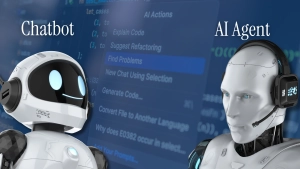
That’s the difference between chatbots and AI agents. A chatbot answers FAQs. An AI agent reads context, applies your business rules, takes action across your systems, and escalates intelligently when needed.
In this guide, we’ll walk you through what AI customer service agents actually do, why they’re transforming support operations, what ROI looks like in real deployments, and how to implement one successfully.
What Are AI Agents for Customer Service?
Let’s be clear: chatbots and AI customer service agents are different animals.
Chatbot: Customer asks “Where’s my order?” Bot responds: “Click here to track your shipment.” Customer clicks. Customer still doesn’t know if their order is actually lost.
AI Agent: Customer asks “Where’s my order?” Agent pulls up order in CRM. Checks tracking system. Sees it’s stuck. Reads your policy. Issues a replacement. Sends confirmation. Posts summary to Slack. All without human involvement.
The difference? Action. Real resolution. Intelligence.
AI customer service agents use machine learning, natural language processing, and large language models to:
- ✅ Understand customer intent (even when unclear)
- ✅ Pull relevant context from your systems
- ✅ Apply your specific business rules and policies
- ✅ Take action (refunds, returns, updates, escalations)
- ✅ Learn from every interaction and improve
This isn’t science fiction. Companies are deploying these right now. And the results are measurable.
The Real Business Case: Numbers That Matter
Cost Savings
Your benchmark: A human-handled support ticket costs $6-$12 depending on complexity and agent salary.
AI agent resolution cost: $0.99-$2.00 per interaction.
For a 10-person support team ($350K annual cost) handling 5,000 tickets monthly:
- Current cost per ticket: $7 (annual: $420K)
- With AI handling 70% of volume: Annual labor cost drops to $120K
- Annual savings: $300K (and you keep your people)
But here’s the thing: Those people aren’t getting laid off. They’re handling the 30% of tickets that actually need judgment, empathy, and problem-solving. The tickets that matter.
Revenue Protection
Customers are 2.4x more likely to stay loyal when problems are resolved quickly.
Implementing AI customer service typically reduces churn by 15%. For a SaaS company with $10M annual revenue and 10% average churn:
- Current churn loss: $1M annually
- With 15% churn reduction: $150K revenue protected
That’s not cost savings. That’s revenue you keep.
Speed & Satisfaction
Benchmark from current deployments:
- Response time: From hours to seconds (AI available 24/7)
- Resolution rate: 40-60% of issues resolved without human involvement
- CSAT improvement: +35% typically reported
- Handle time: Down 30-50% for escalated cases (because context is prepared)
How AI Agents Actually Work in Practice
Scenario: Customer emails support at 2 AM
Customer message: “I need to cancel my subscription before I’m charged again.”
Here’s what happens:
Step 1: Perceive AI reads email. Identifies intent: Account management + cancellation request.
Step 2: Reason
- Looks up customer in CRM
- Pulls billing information
- Checks cancellation policy
- Reviews customer history (15 months, always paid on time, no complaints)
- Analyzes sentiment (frustrated but reasonable)
Step 3: Act
- Cancels subscription effective immediately
- Issues prorated refund ($23.50)
- Sends confirmation email with cancellation details
- Suggests pausing the subscription as an alternative
- Logs case as resolved
- Posts to team Slack: “High-value customer canceled. Reason: Price-conscious at renewal. Suggest re-engagement in 6 months.”
Result: Customer gets resolution at 2 AM. No human involved. Team has context if they want to follow up later.
This happens 1,000 times a day without your team doing anything.
Real Results From USA Deployments
E-Commerce: 52% Efficiency Gain
Mid-market e-commerce company (800K annual revenue) deployed AI agents on customer service.
Results after 6 months:
- Ticket volume: 8,000/month
- AI resolution rate: 52% (4,160 tickets/month)
- Cost per ticket: Dropped from $8.50 to $4.20
- Monthly savings: $34,880
- Annual ROI: 485% (against $50K implementation cost)
- CSAT: Improved from 78 to 89 (11-point jump)
Customer quote: “We cut support costs in half while customers actually report better experiences. It’s the only AI investment that paid for itself in the first month.”
SaaS: Scaled Without Headcount
B2B SaaS company ($8M revenue) hit support bottleneck at 5,000 customers. Would normally add 2 support people ($160K). Deployed AI agents instead.
Results:
- Ticket volume: 12,000/month average, spikes to 18,000
- AI agents handle 60% automatically
- Support team: Stayed at 6 people (would need 8 without AI)
- Cost avoided: $160K+ annually
- Tickets resolved in <1 minute average (vs. 45 minutes human average)
- Revenue impact: Higher retention (customers never see frustration) = $450K additional revenue protected
Total first-year impact: $610K ($160K cost avoided + $450K revenue protected).
Financial Services: Compliance Automation
Regional bank deployed AI agents for customer inquiries + account services.
Results:
- Reduced human handle time: 30-40 minutes → 8 minutes (agents have prepared context)
- Automated inquiries: 45% (authorization checks, account status, balance inquiries)
- Compliance accuracy: 99.7% (AI never forgets a regulatory requirement)
- Cost reduction: $280K annually
- Implementation: 90 days
Why Most AI Customer Service Implementations Fail

Mistake #1: Thin Knowledge Base
What happens: Company deploys AI agent without thorough documentation.
- Agent doesn’t have answers
- Escalates everything
- Customers frustrated
- Team thinks “AI doesn’t work”
What actually works: Audit your top 20 ticket types. Ensure accurate answers exist for each. Pre-launch knowledge base quality predicts 2-3x better deflection rates.
Mistake #2: Expecting Immediate Perfection
Reality: New AI agents have a “CX Dip” in first 2-4 weeks.
- Agent learning the product
- Integration kinks
- CSAT might dip slightly
Solution: Plan for this. Have monitoring in place. Accept 3-4 week ramp. You’ll hit stride by week 6-8.
Mistake #3: Forgetting the Human Handoff
The problem: AI agents that can’t escalate intelligently frustrate customers AND your support team.
What works: Build in clear handoff logic. If customer is angry, escalate immediately. If AI confidence is low, escalate. Train your team to understand context prepared by AI.
Mistake #4: Deploying and Moving On
High-ROI deployments have an owner. They have a roadmap. They review what the agent gets wrong and fix it.
Low-ROI deployments get deployed and abandoned. They never improve.
The ROI Timeline You Should Expect
Weeks 1-4: Setup & Learning Phase
- Implementation
- Knowledge base preparation
- Integration testing
- Resolution rate: 10-20%
Weeks 5-12: Ramp Phase
- Agent learning from interactions
- Teams optimizing handoff
- Guardrails refined
- Resolution rate: 30-45%
Months 4+: Mature Phase
- Agent consistently handling 50-70% of volume
- Continuous improvement
- Predictable ROI
Year 1: 75-150% ROI (depending on volume and implementation quality). Year 2: 200%+ ROI (agent improved, team optimized, processes refined). Year 3+: 300%+ ROI (compounding returns)
CodeStore Solutions: Why We’re Different
We’ve deployed 50+ AI customer service agents across the USA for companies like yours.
What We Actually Do
We don’t sell generic AI platforms. We build custom AI agents specifically configured for your industry, your workflows, your policies.
A healthcare provider needs different governance than e-commerce. A financial services company has different compliance requirements than SaaS. Your insurance policy language is unique.
Generic solutions don’t know this. We do.
Our Expertise
Track Record:
- 50+ live customer service AI deployments
- Average Year 1 ROI: 240%
- Median implementation payback: 8 weeks
- Customer satisfaction: 89% report 30%+ CSAT improvement
Industry Expertise:
- Healthcare: HIPAA-ready agents handling patient communications
- Financial Services: Regulatory-compliant agents with perfect audit trails
- E-Commerce: Custom agents understanding refund policies, return workflows
- SaaS: Product-aware agents with deep knowledge base integration
- Enterprise: Multi-channel agents across web, email, chat, phone
Credentials:
- SOC 2 Type II certified
- ISO 27001 compliant
- HIPAA-ready infrastructure
- Regulatory expertise in finance, healthcare, government

Why Companies Choose CodeStore for AI Customer Service
1. We understand YOUR business, not generic solutions. We learn your workflows, policies, and compliance requirements. Your AI agent understands your world specifically.
2. We manage the messy part: Knowledge base audit. Integration testing. Handoff logic. Team training. Continuous monitoring. We handle the complexity so you get clean results.
3. We optimize constantly: Month 3, month 6, month 12—we review what the agent is missing and fix it. Most vendors deploy and disappear. We’re here improving your ROI.
4. We’re honest about limitations: AI agents don’t work for 100% of cases. We tell you this upfront. We design for 50-70% automation, not 100%. Better customer experience. Better employee experience. Realistic expectations.
5. We’re experienced with real deployments. You’re not our experiment. You’re our 47th similar deployment. We know what works, what doesn’t, and how to fix it.
Implementation Roadmap: 90 Days to Live
Phase 1 (Days 1-14): Discovery & Design
- Understand your workflow, policies, top ticket types
- Design agent capabilities and guardrails
- Prepare knowledge base audit
Phase 2 (Days 15-28): Knowledge Base & Integration
- Clean and structure your help documentation
- Connect AI to CRM, helpdesk, order management
- Test integrations thoroughly
Phase 3 (Days 29-49): Development & Testing
- Build your custom agent
- Test on real ticket types
- Refine accuracy and handoff logic
Phase 4 (Days 50-90): Deployment & Optimization
- Shadow mode (agent works, human approves)
- Gradual rollout (25% → 50% → 100% of volume)
- Daily monitoring, continuous improvement
Timeline: 90 days typically. Simple implementations: 60 days. Complex enterprise: 120 days.
Frequently Asked Questions
Getting Started: Next Steps
Option 1: Free Assessment (30 minutes) Schedule a Free AI Customer Service Consultation
We’ll:
- Understand your current support model
- Identify high-impact automation opportunities
- Show realistic ROI for your situation
- Answer your specific questions
Option 2: Download the ROI Calculator. Model your numbers. See what AI customer service could mean for your business. Use real benchmarks. Build your business case.
Option 3: Request a Case Study. See exactly how a company similar to yours implemented AI agents. Real metrics. Real results.
Why Now? Why AI Agents for Customer Service?
The math has shifted. Here’s the reality:
- Customer expectations changed. They expect 24/7 support, instant answers, consistent service. Humans can’t do this. AI can.
- Support costs are exploding. Good support people cost $60K-$80K annually. Even a small team is $300K+. AI doesn’t replace this—it makes it sustainable.
- AI is ready. This isn’t early-stage technology anymore. Companies have proven the patterns. We know what works.
- Competitive pressure is real. Your competitor deploying AI customer service will outpace you. Faster resolution. Better CSAT. Lower costs. It compounds.
The question isn’t “Should we explore AI customer service?” anymore.
The question is: How quickly can we implement it?
Ready to Transform Your Customer Service?
AI agents for customer service aren’t the future. They’re happening right now. Companies that move in 2026 will have a massive advantage in 2027.
Explore our Custom AI Agent Development Services for Customer Support to see exactly how we build customer service agents for your specific business.
We’ve done this 50+ times. For companies just like yours. Across industries, geographies, complexity levels.
Request your free consultation and let’s talk about what’s possible for your support operation.
Or visit our homepage to learn more about our AI development expertise.
Contact us today to discuss your customer service transformation.
The best time to implement AI customer service was 6 months ago. The second-best time is now.
Conclusion
AI agents for customer service are transforming support operations. Not tomorrow. Today.
Companies deploying autonomous customer service agents are seeing 40-60% cost reductions, 35% CSAT improvements, and ROI that pays for itself in weeks.
But here’s the catch: Not all AI agents are created equal. Generic solutions fail. Custom agents built for YOUR business, YOUR workflows, YOUR policies—these succeed.
That’s what we build at CodeStore Solutions. Custom AI agents for customer service that actually work.
If you’re ready to transform your support operation, let’s talk.